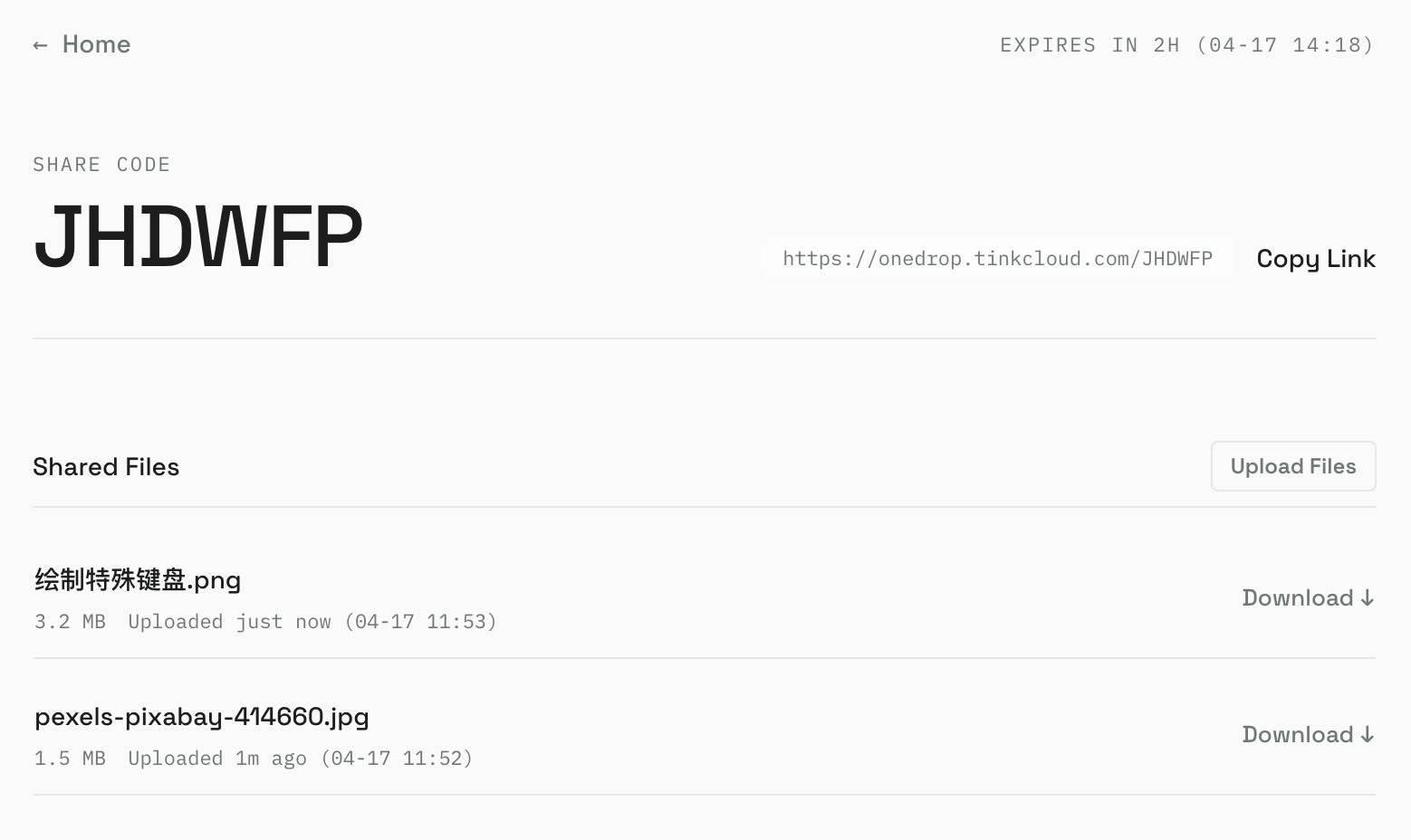
We built Onedrop to solve a recurring file transfer problem. The url is https://0x1.one.
“A file needs to move right now. But there’s no shared Wi-Fi, no common LAN transfer app, no AirDrop because devices are different brands, and no common social app on both sides.”
“Phone to laptop. Android to iPhone. Visitor to meeting room PC.”
“The file is simple. The handoff is hard.”
The friction that pushed us
We noticed the same pattern again and again. Some tools were available, but the environment was usually the blocker.
Most temporary share tools use long, complex URLs. They work when you can click a link directly, but they’re painful when you have to manually type them into another device. In that moment, every extra character feels expensive.
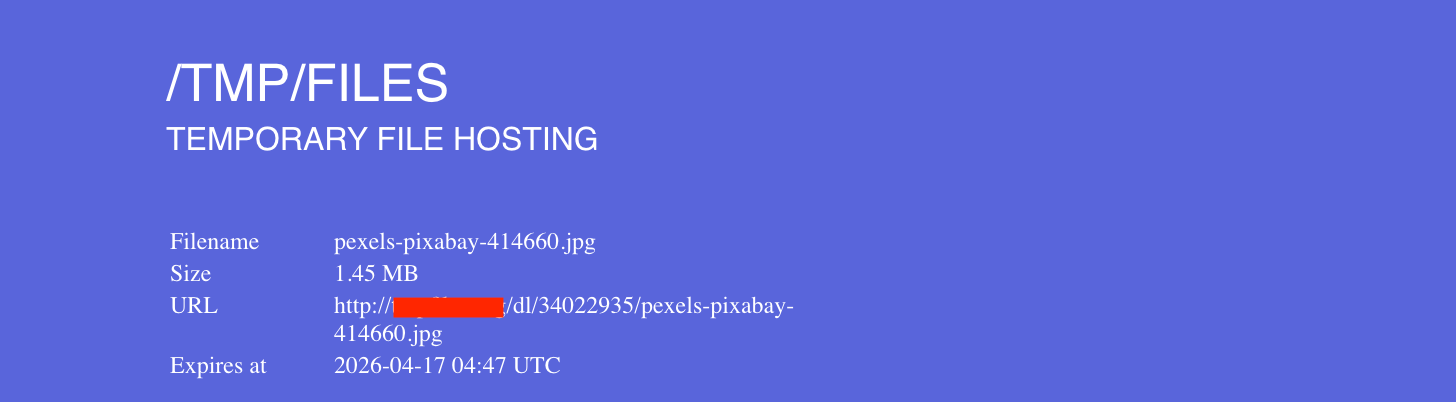
Onedrop started from one goal: the receiver should join fast without setup.
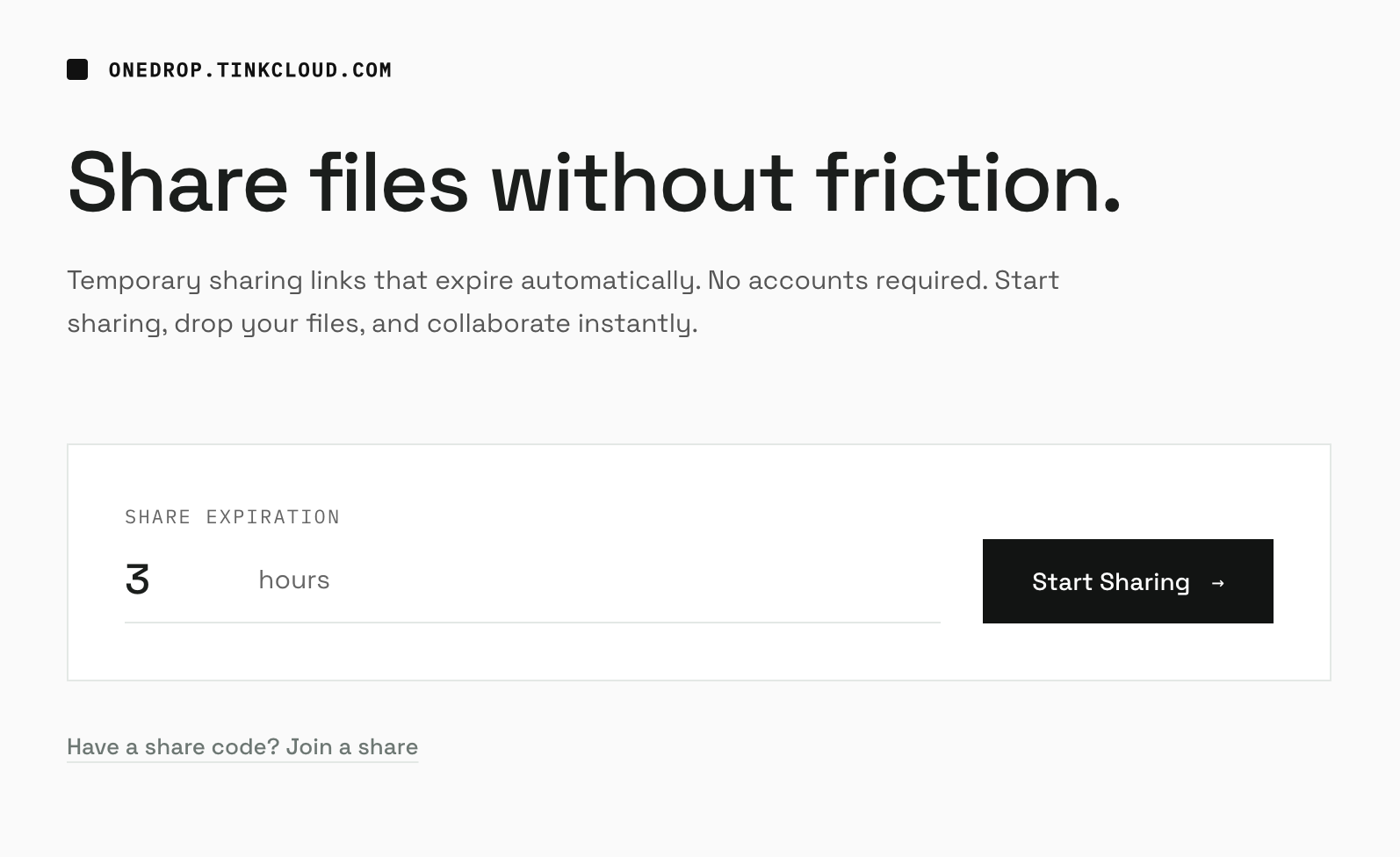
- Fast: No login or accounts required.
- Short: 6-character codes that are easy to remember and type.
- Temporary: Default 3-hour expiration, maxing out at 24 hours.
No ceremony, just movement.
Design: Minimal utility
The UI is clean because the situation is usually urgent. When people share files, they’re often in transit, in a conversation, or switching between devices. The interface should reduce thinking.
We shifted toward a minimalist, utility-driven aesthetic. Sharp lines, high-contrast borders, and structural whitespace replace decorative blurs or rounded corners. It feels like a tool, not a toy.
- One primary action on each step.
- Codes and status placed first in the visual hierarchy.
- Direct wording with no decorative copy.
- IBM Plex Mono for rigid data like share codes and timestamps.
Every piece is intentional. Minimal isn’t less; it’s just what helps.
Built in three hours
Onedrop went from an idea to a usable product in about three hours with AI support in implementation. The value wasn’t just speed. It was the ability to iterate quickly. We could test, adjust, and test again in one short cycle instead of carrying the friction for months.
This changes how we build small tools. If a problem is real, it becomes immediately solvable.
How it works
The architecture is simple and reliable. We use Cloudflare R2 for file storage and metadata. Expiration is enforced by the backend, with a scheduled cleanup job that removes stale spaces and files automatically.
When “send now” is the job, infrastructure quality is part of the experience. Global edge delivery keeps response times low, which matters when transfer windows are short by design.
Onedrop solves one problem: sending a file quickly between mismatched devices. It focuses on temporary transfer, simple steps, and reliable speed.